Tuesday, 23 July 2019

8. The Great Demotions

It is currently 2:39am the night before my next therapy appointment. Since the last post, I have had three sessions, and despite being convinced about the importance and the need to make regular updates on each of my sessions, I have failed to do so. I remain stuck in my temporal vortex. I put off doing things I know I need to do, including writing these posts, I procrastinate and, on the whole, avoid important things. This is one of my major struggles, so this is actually highlighting to myself that this is another priority area I need to be working on. I am quite certain this avoidance behaviour is a type of coping mechanism:

In psychology, avoidance/avoidant coping or escape coping is a maladaptive coping mechanism characterized by the effort to avoid dealing with a stressor. Coping refers to behaviors that attempt to protect oneself from psychological damage ... Avoidance coping, including social withdrawal, is an aspect of avoidant personality disorder, but not everyone who displays such behaviors meets the definition of having a personality disorder [Wikipedia].

Psychology Today lists 9 types of avoidance coping to look out for, and I am copying them down here to see which ones I identify most with.

  • 1. You avoid taking actions that trigger painful memories from the past.
For example, you avoid asking questions in class because it reminds you of a time you asked a question, and the teacher embarrassed you. Or, you avoid going to a professor's office hours because she gave you a disappointing grade last semester and the thought of approaching her retriggers your feelings about the grade. Avoiding things that trigger difficult memories is one of the most important and common types of avoidance coping.
  • 2. You try to stay under the radar.
People who have a sense of defectiveness often try to stay “under the radar.” They often fear things like being kicked of university, or their success feels fraudulent to them. They feel like if they're noticed, their flaws will be revealed.
  • 3. You avoid reality testing your thoughts.
For example, you’re worried your child is on the autism spectrum, and you put your head in the sand or just read stuff on the internet rather than seek a professional assessment.
  • 4. You try to avoid the potential for people being mad at you.
For example, you avoid asking for things you want in case the person gets mad at you for asking. People who are very concerned about others potentially being mad at them might just be people-pleasers, or they may have anxiety about rejection. You might’ve had experiences of anger leading to rejection, or just have an anxious attachment style. In most situations, anger doesn’t lead to rejection. Often trying to avoid experiencing other people being angry backfires and you end up doing things that are more likely to cause anger e.g., you avoid telling someone you can't go to an event, squeeze it in and then end up arriving really late.
  •  5. You have a tendency to stop working on a goal when an anxiety-provoking thought comes up.
For example, you tend to quit difficult goals or tasks if you start thinking “This is hard” or “I’m not sure if I’m going to be able to do this.” Accept that these types of thoughts are often par of the course when working on difficult goals (Also make sure you’re taking enough breaks).
  • 6. You avoid feeling awkward.  
You avoid potentially awkward conversations not so much because you fear the consequences but because you have a tendency to avoid any feelings of awkwardness. When you start allowing yourself to experience awkwardness, you’ll realize it’s not that bad, and you can cope.

  •  7. You avoid starting a task if you don’t know how you’re going to finish it.
Don’t worry about all the steps, just do the first logical step. Action is much more likely to produce new insights than ruminating.

  •  8. You avoid certain physical sensations.
This is especially common in people prone to panic attacks. Examples:

- Unfit people (and people with panic disorder) sometimes avoid sensations of exertion e.g., avoid getting their heart rate up during exercise.

- People with body image issues might avoid sexual sensations that activate their body image concerns.

- Overeaters sometimes avoid feeling even a little bit hungry i.e., they eat before they feel sensations of hunger.
  • 9. You avoid entering situations that may trigger thoughts like “I’m not the best. I’m not as good as other people.”
If your sense of self-worth is based on being better than average in all important areas, you’ll struggle with situations that trigger unfavourable social comparison. This can really hold you back from improving in areas where you’re not strong. Practice exposing yourself to people who are better than you in areas where you’d like to improve. Expecting yourself to be better than average at everything, or expecting yourself to be good at things with extensive practice, is a recipe for misery! 

----------

Based on the above, I immediately relate most to areas 2 (especially feeling like a fraud - I know this is a big topic in academia and is known as imposter syndrome), 4, 5, 6, 7, 8, and 9 (this last one is also closely linked to imposter syndrome I think). I don't consciously avoid painful memories from the past but I also acknowledge that this is probably working subconsciously as well in some way, so I can add number 1 as well. 

Luckily I have notes on my previous three sessions so I can still write them up and reflect on them properly, but I need to do this while the memories are still fresh, and with every new session the details begin to blur together. I think my first step is to consciously block off time, let's say on Saturday, to do so. Otherwise, I will do what I always do and just do things when I 'feel' like doing them. This whole topic is so important since just yesterday I was supposed to have a meeting about a research project which I postponed to Friday for no other reason than feeling very anxious and panicky about it. There is so much to do overall, but I think, no I know, this adds to my paralysis. 

I have often considered the Eisenhower decision matrix, but I know it alone doesn't work for me:


I struggle and have always struggled, to stick to any kind of schedule or structured time-table. The instant I try I feel so overwhelmed with pressure and panic I fall off the rails completely at the first difficulty or missed target. I flee from discomfort and seek safe, familiar grounds. Sometimes I fall into spirals of watching random Youtube videos all night until 5 or 6 am. Number 5 above speaks directly to this. Finding a way to set up some kind of more flexible schedule that is not fear-driven seems like a good objective.
Acknowleging the problem is my first step. Not doing so, as Carl Sagan put it in Pale Blue Dot, "amounts to willful disregard of the evidence, and a flight from self-knowledge."

Saturday, 6 July 2019

7. Through a Glass Darkly

 Speak the truth, even if your voice shakes.

Another (unproductive) week has passed, and it is time again to reflect. The past week's therapy session dealt with a particularly difficult topic, leading to even more of a propensity for me to put off writing my weekly post about it. However, I am proud that despite these feelings, I am here. The topic was my upbringing and major themes related to it. I call this traveling on the hard gravel road of therapy, since it is not an easy thing to do but still gets you where you need to go. It is a necessary journey to make towards healing. 


During the session, it was evident that discussing my upbringing, and my parents elicited a fierce physical reaction, and I was quite violently shaking for the entire duration. This is further proof that there can be no distinction between the mind and the body since these are merely different aspects of the same phenomenon, namely that of a complete person. Therefore if the mind is unwell, or one is bottling up particularly painful memories and feelings, it must have an effect on the body. Similarly, talking about or releasing these memories and feelings can produce a physical reaction. This tells me I'm on the right path and dealing with something of critical importance to my well-being. I think it was because, for the first time, I could freely express how I experienced my upbringing and my relationship with my parents, and have my feelings validated and recognised. For me, there were also connotations of fear and emotional pain associated with these. After my session, I was completely physically and mentally drained for the rest of the day.

Nevertheless, directly after my session I wrote down the main points raised or insights gained as to not allow them to be forgotten. I continued this through the week as new things popped into my mind. Perhaps this means it's good to wait a few days to process the session before writing about it.

As I noted before, I like to think in metaphors, analogies, and similies, and in this case, it is no different. Because we were dealing with such a foundational topic - one's childhood, upbringing, and parents necessarily must have a profound impact on one's lifelong development - I liken my current transformative process and ways of looking at these foundational issues here to three images. These will be explored in turn, beginning with a mine.

The Mine of the Mind


I use my beloved similies and figures of speech to help me make sense of things. For the process of therapy and catering to one's mental health, I like the image of a mine - in this case, a mine of the mind. A mine like the one shown in the image has many levels where side tunnels go off in various horizontal directions. I like to think of the terrain here as being made up of memories, experiences, thought patterns, beliefs - all the mental things we accumulate over our lives. For most of us, self-reflection will be quite superficial, and only involve looking at the most recent, surface level, issues, but when one engages in a therapeutic process a mine is built (perhaps signifying the expert help and guidance of the councillor or psychologist), and during the process of therapy one then descends to deeper levels to begin digging in the mental sediment for clues. This is not always easy, and in fact, becomes more difficult the deeper down you go. The very deepest level is, of course, that of your upbringing, your early childhood in particular. Digging here can create earthquakes due to the cumulative pressure of so many years, thoughts, memories, and beliefs. I like to think this was the shaking I experienced during therapy. It is indeed here where the greatest insights and treasures may be found, dug up like old bones for examination - interrogated for their secrets. Long buried, forgotten, seemingly lost in time, these fossils, like the truth they are, are "always there, whether we see it or not, whether we choose to or not. The truth doesn't care about our needs or wants, it doesn't care about our governments, our ideologies, our religions. It will lie in wait for all time" [Chernobyl HBO series].


The Ancient City


The second major image is that of an ancient city, much like Jericho, shown above. Similarly, we are built up over the ages of our life, flaws and ruins included. Jericho is one of the oldest inhabited cities in the world, with an "oval mound [which] stands 8-12 meters (26-40 feet) tall above the lake bed, a height made up of the ruins of 8,000 years of building and rebuilding in the same place" [https://www.thoughtco.com/jericho-palestine-archaeology-of-ancient-city-171414]. This is of course directly linked to the mine above, which in a sense diggs into the earth to investigate the remains of the older cities - you as you were at different ages - to see how you changed and evolved, and to identify where flaws or skewed beliefs were built into the succession of cities. This is a very relevant analogy for the themes discussed in this week's therapy session, as highlighted below. 

The Jovian Moon
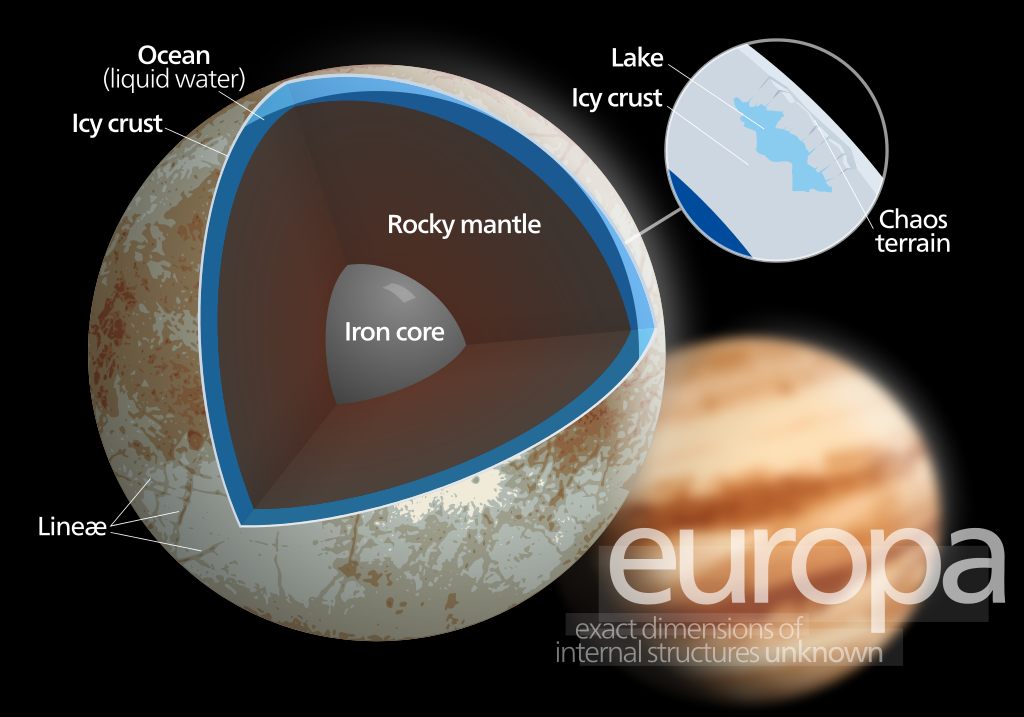

Being a passionate lover of astronomy, I am familiar with Jupiter's moon Europa. This is another useful analogy since the crust of Europa consists of a thick layer of ice, under which there is strongly suspected to be a liquid water ocean 60-150km in depth. This is one of the best candidates for finding life beyond the Earth in our own solar system. The value of this image for the discussion here relates to structure and agency. The issue of structure and agency will be discussed in further detail below, but here it suffices to say that no matter how skewed or flawed one's 'mental city' is due to unhealthy early influences (and accordingly to what extent one is bound by mental, social, familial, or historical structures), one always retains the power of agency to confront this past and work towards healing. Even recently I was so suicidally depressed I would refuse to believe this, thinking I was eternally doomed, so why not commit suicide now and save myself unnecessary pain. But now that I've begun setting out on the hard gravel road of therapy, I begin to see how my future is not preordained to suffer from the torments of my past. This is all anchored by the belief, and the hope, that healing is possible. In this way, I, like Europa, was bound in ice, deposited over the years of emotional neglect and torment I suffered as a result, and yet, deep under the ice, liquid water is beginning to flow. Change is in the air. In moments when I begin to see the sediments of my past more clearly, and how they need not bind me forever, I, again like Europa, have my liquid water - momentarily - burst through the ice. Despite the pain, my essence remains.


Childhood Emotional Neglect

When I recounted my history (my therapist emphasised that we all have a history - his story), it was quickly apparent that I did not have the happy upbringing I would have wanted. While my parents always catered to my material and physical needs, there was a severe lack when it came to my emotional needs. This is the basic definition of Childhood Emotional Neglect (CEN), which I had long suspected I was a victim of: "Identified by clinical psychologist Jonice Webb, childhood emotional neglect is 'a parent's failure to respond enough to a child's emotional needs.' When that happens, there's no way for a child to know if their feelings are valid".

This is probably why I shook so violently during therapy - this lack of validation was finally being treated by confiding in a neutral but compassionate observer, namely the therapist. I suspect that many of my weaknesses listed in the previous post can be attributed to this CEN, such as low self-esteem, low self-belief, feeling worthless, feeling ugly, not fitting in, etc. My therapist mentioned attachment theory in terms of my discussion of my past. This is described as: "Attachment theory states that a strong emotional and physical attachment to at least one primary caregiver is critical to personal development. John Bowlby first coined the term as a result of his studies involving the developmental psychology of children from various backgrounds". This attachment was to a very large degree absent from my upbringing. There are many examples I can also offer to testify that my parents never saw my beliefs or opinions as valid, or validated them.

Even this year, when my mother's dog, now cared for primarily by my father, clearly had an ear infection, but every time I mentioned this, I was told the dog was not really shaking its head or doesn't really look ill. Recently, the poor dog was taken to the vet for another matter, and a bad double ear infection was discovered, which took some time treat. Even in the past few days, my dad said Molly is like a new dog after the ear infections were cleared, and I was badly tempted to say, I TOLD YOU something was wrong many months ago! But any time I try and push my point, for instance, that there was something wrong, my dad would just get rapidly irritated and dismiss me even more (it is clear he values other people's input but not my own unless it directly benefits him like setting up his smart tv, then suddenly I'm told I'm smart and a genius. My dad also has extreme anger issues and growing up was like walking on eggshells). Just imagine growing up with two parents like this - all the time. Like my therapist said, anyone who went through this would experience severe - and if untreated lifelong -  torment. Even now I continuously have to justify everything I think in my own mind to myself. In this way, the dismissal of my beliefs, opinions, wants, needs, and value as a human being was internalised all these years. It also explains why it pains me to do even small things, nevermind big things, without having thought about and planned every detail. I carry my mental shackles with me wherever I go. I have high levels of anxienty in general. I will leave further examples of this CEN for other posts, including my mother's death since even on her deathbed she could not say she loved me. 

I am reminded here of Ubuntu, a concept I have used in my research work - distilled into meaning "a person is a person through other people". My therapist here told me that what we think of as our own 'self-image' is really in truth the image of us by other people, mainly our parents, that gets implanted and ingrained into our minds. The example of being told you are worthless, or stupid, and this then becoming a self-belief or self-image, literally how you define yourself, is clear. This reminds me to write a post at some point about our personal mythologies and the importance thereof. I knew, even from a very young age that something was wrong in my household. As a young child, I clearly remember telling my mother she didn't really want me, in our parked car in front of a shop. As I recall, she responded with something like she was glad she got a boy so she wouldn't have to teach a girl how to cook and do other things stereotypically associated with the female gender. This, in itself is very telling. My parents had been married for 10 years before my birth. Maybe I really was unwanted. This pains me deeply. It is the deepest level in my mine.

My therapist reiterated that we would mostly be working with the present in our sessions, but that the present has deep roots in the past, as I have attempted to illustrate through my analogies above. She said she will confront my false beliefs. I cannot say I am not afraid. As I said in a prior post, sometimes our pains become part of our dearest illusions, but to be a scientist we must - like I wrote about Kepler before - prefer the hard truth to our dearest illusions. We must, as Tina Turner put it in her autobiography: 

What was it like when I walked out and left Ike? Yeah - I was afraid. But sometimes you have to let everything go - purge yourself. I did that. I had nothing but my freedom. My message here, and I hope that there is a message for people in this book, is: If you are unhappy with anything - your mother, your father, your husband, your wife, your job, your boss, your car - whatever is bringing you down, get rid of it. Because you'll find that when you're free, your true creativity, your true self comes out. [I remember reading this as a teenager and immediately resonating with the parents part]

We must, in this sense, break the flawed mirror of our implanted self-image and build a new one on firmer foundations. Like Harry Belafonte put it, 'house built on a rock foundation, it will stand, oh yes'. 

Hosanna, rain come wash on it
Sun come shine on it
Storm can't blow it down
This house will always be
It will be strong you see.

Earlier I mentioned agency and structure. One of the best ways to think about it in this context was written in a research methods book I have cherished for years.

The critical researcher says that people have a great deal of unrealised potential. People are creative, changeable, and adaptive. Despite their creativity and potential for change, however, people can also be misled, mistreated, and exploited by others. They become trapped in a web of social meanings, obligations, and relationships. They fail to see how change is possible and thus lose their independence, freedom, and control over their lives. This happens when people allow themselves to become isolated and detached from others in similar situations [or prefessional help]. The potential of people can be realised if they dispell their illusions and join collectively to change society [or themselves]. People can change the social world, but delusion, isolation, and oppresive conditions in everyday life often prevent them from realising their dreams.
Thus we retain our agency or ability to act, even if it is so constrained, and it is why I must act now. So many years have been spent suffering and in isolation. I missed out on so many things that people do in their youth by cloistering myself in the act of self-protection (since my self-images have made me believe this flawed image of myself is true, and others will reject or mock me). Being gay complicated matters much more, since I didn't know or accept myself and couldn't even begin to express myself or speak my truth into my 30s. I have never known love or been in a relationship. I have only one main friend from my school days who lives on the other side of the country, whom I see maybe every second year. I never go out, even to the movies, on my own. I cannot face people, I look away from them, I avoid them, I fear them. The bullying I experienced at school (even primary school - and when I told my mother, she said I must have done something to make people treat me this way) has remained close to the surface of my life. I don't yet know how I can heal or recover from all this. But I must before I have no life left. This is one reason I couldn't commit suicide - if I had, then my whole his-story would have been one of pain, with no possibility of recovery. Now I still have hope that I can have many happy years ahead, even if the journey to get there will be painful and difficult. I am escaping the hall of mirrors in which I was trapped.

My parents, I am sure, were trapped in their own way by their painful past. My mother's mother was by all accounts, quite a cruel woman who kept toys hidden away in cupboards, which could not be played with, merely held and returned. My father's father was a deeply depressive drunk who died from his drink when my father was 12. These no doubt left deep scars. And yet, what I cannot understand, my mother had, I gather, a good relationship with her father (who died before I was born), as did my father with his mother, and yet neither ever made any attempt to heal or remedy their emotionally shallowness and deficiency. Now imagine - I had two such parents - how much worse off am I not, and yet despite suicidal depression here I am, trying. Maybe there is more to their stories that I will never know of, but they were unaffectionate - even to each other - and hugs, kisses, 'I love yous' and other critical building blocks of a happy life were entirely absent from our home. As my therapist said, it was not at all out of character for my mother to hide her deadly illness or not return my 'I love you' said to her on her deathbed. However, I can say this generational pain ends here. I will be the Great Wall. If I ever do have children (yes gay people certainly can have them), they will only know life beyond the wall. And so will I.


I think the term gaslighting is another important one to remember for the future. Beyond neglect, as the above example of my father and poor Molly showed, I certainly am a lifelong victim of this:

Gaslighting is a manipulative tactic in which a person, to gain power and control, plants seeds of uncertainty in the victim [I think even if they are not doing it with a specific agenda it can still happen]. The self-doubt and constant skepticism slowly and meticulously cause the individual to question their reality ... Additionally, the movie Gaslight also touches on how gaslighting can lead to the victim developing a form of Stockholm Syndrome. The victim becomes so uncertain of their sense of reality that they are now solely dependent on the gaslighter [here I am, still living with my parents/dad, any coincidence?]. From https://www.thrivetalk.com/gaslighting/
This needs further investigation and unpacking in future posts. My therapist also spoke about the child in all of us. I still carry that child's pain, but also that child's hope and creativity. He is still alive.


As my therapist also asked, what now? I don't know. I suppose uncovering these truths, and then questioning and confronting them, and replacing them with new healthier ones, is a start, as is looking at the past and my family setup from a different perspective. I must keep walking along this hard gravel road. As my therapist said, ultimately what I went through was not about me. This is one of the major insights I took away from the session.

My final quote here is from Star Trek: The Next Generation when Picard's brother lay out a simple choice for him after he suffered a great tragedy and wanted to start working in an undersea research base essentially to escape from the pain. I slightly adapt it here to fit the context. I took face this choice and choose to live above the clouds.

This is going to be with you a long time Jean-Luc, a long time. You have to learn to live with it. You have a simple choice now - live with it below the sea [escaping, contuing to live in misery] or above the clouds with the Enterprise [doing what you love, following your passions].

[Addendum: during the writing of this post I developed another headache and eye twiches - further signs I am right to express my pent-up thoughts on this subject.]

Saturday, 29 June 2019

6. Abberations of Light

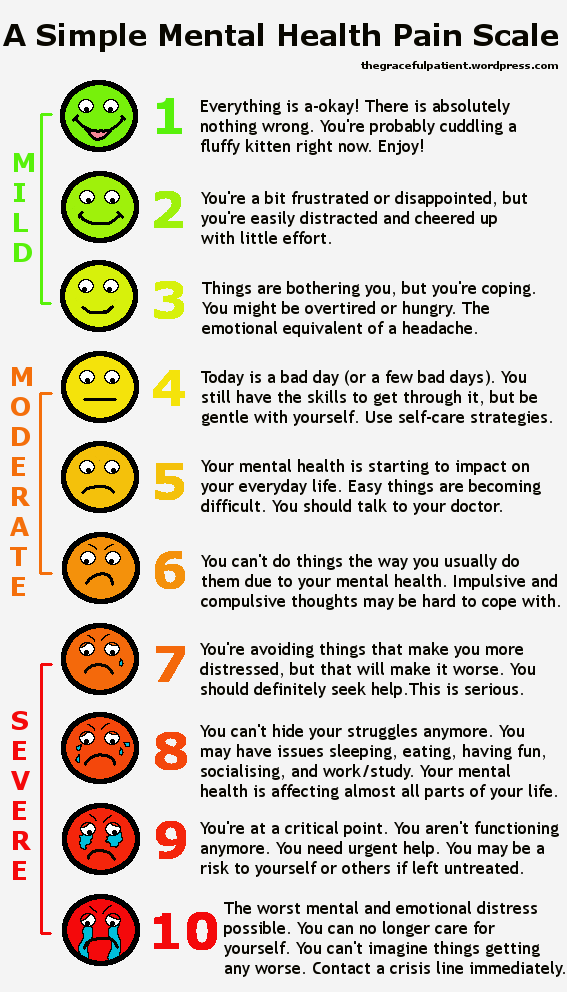
This post marks the end of another week, and it's thus time to reflect. Based on the Simple Mental Health Pain Scale shared in the previous post (hereafter abbreviated SMHPS), I would say that this week has been much better than the preceding one. Earlier in that preceding week, I was still reeling from the release of my 'testament' Facebook post, and by Thursday I was having another mental health collapse (a.k.a. 'death spiral'), which finally prompted me to book the appointment with the therapist. 

Having met with the therapist on Monday this week, I felt much better for the most part, despite us having only briefly gone over my history and touching on some key issues. I think just the knowledge that there will be more therapy sessions makes me calmer because I know there will at least be someone to talk and vent to. The danger, however, is that troubling issues might arise, and then given that my therapy session is still days away, be forgotten in the course of daily activities. Then the troubles remain buried in my subconscious, but I may forget to raise it in the session. I have to be sure to make notes from now on about how I'm feeling and about anything troubling me. That way, I'll be sure to remember by the time of my next session. Otherwise, any lessons or insights might be overlooked. It might be useful to spend the first few minutes of any therapy session just reviewing the past week. At any rate, it's difficult to judge accurately where this past week falls on the SMHPS, but 6 sounds pretty accurate since I still try and avoid all stressful tasks. In other news, I had the worst headache of my life on Wednesday, and it wouldn't get better despite taking ordinary painkillers and lying down. I eventually had no choice but to visit the Emergency Room, where I was placed on a drip with anti-inflammatory medication and strong painkillers. That worked, and I was prescribed the same medication in pill form. The next day it was still a little painful, so I took the pills, but subsequently didn't do the work I wanted to on a research paper, and again put off a meeting that was supposed to be on Friday. I wonder if it might have been stress related, precisely in response to that work and meeting. I also wonder if the anti-depressants I stopped taking about two weeks prior had anything to do with it.

In the meantime, I've been thinking more about the 'assignment' I have for Monday. I've put off doing it - as I do with most things (one of the issues I need to address through therapy) - but I thought the best framework might be the most straightforward, namely using the kernel contained in the previous post (more of my strengths and fewer of my weaknesses) as the foundation. There are many dimensions to happiness or being the person you always wanted to be, but I think being realistic is essential. There will never be a time when everything is 'perfect' since such perfection does not exist. Therefore, focusing on gradually reducing some of my main weaknesses and building on my strengths is a sensible plan. Of course, this means I must identify these first, which is easier said than done, especially for my strengths. I've outlined the major areas I want to work on in therapy, and these are all linked in some way to weaknesses. Perhaps strengths in this sense are the opposite of the weaknesses? 

In terms of weaknesses (or perhaps one should more kindly call them challenges?), I outline the main ones below, although I'm sure there are others.

  • laziness
  • lack of enough self-care, including exercise
  • bottling up negative emotions and experiences (perhaps in therapy I will deal with this, after all, speaking about such issues is the point of therapy)
  • inability to cope with stress in a healthy manner
  • escapism (not in itself a bad thing but I do it to get away from stress, mainly through video games)
  • addictive aspects (especially about the abovementioned escapism)
  • poor work-study-life balance
  • terrible procrastination (linked to escapism)
  • lack of social skills/social phobia
  • loneliness (linked to social phobia), lack of friends
  • not fitting in anywhere (this is not per se a weakness since conformity is its own weakness, but I want to at least feel belonging and a sense of community somewhere)
  • lack of self-worth/self-confidence/self-acceptance
  • internalised oppression and homophobia
  • not being able to assert myself enough and avoiding conflict or confrontation completely
  • not feeling good about my appearance/feeling ugly
  • not believing compliments
  • not being able to keep a sleep schedule or schedule of any kind (though the sleep issue is likely linked to non-24-sleep-wake syndrome)
  • struggling to look people in the eyes for any length of time (liked to self-assertion and conflict avoidance and lack of self-worth, and possibly mild autism? - needs further investigation, but I can get overwhelmed by noises and sights and activity like going to a mall after a long period of staying at home - may be linked to agoraphobia and isolation too?)
  • falling into negative spirals and not being able to break free without internalising the negativity
  • not having any romantic experiences (also possibly linked to childhood emotional neglect)
  • feeling the need to please others and to 'kowtow' to authority figures 
  • grief and many conflicting feelings around my mother's relatively recent death
  • lack of boundaries 
  • avoiding social situations, even picking up the phone when possible (introversion contributes here, but is not bad in itself)
  • self-sabotage
  • negative beliefs
  • feels there is a great barrier all around, limiting me, containing me, that I cannot escape 

In short, in unkind moods, I might say I'm a mess, but more gently, there's much to work on. However, all of this is underpinned by my desire to live a full and happy life. How can I do so without being honest about my issues and confronting them? Many people never do this, so I must give credit to myself.

Strengths I can identify at this point include:

  • intelligence
  • kindness
  • a desire to - as Carl Sagan put it - accept and work on uncomfortable truths instead of holding on to my dearest illusions (maybe in some sense an illusion could be that of 'learned helplessness', that I'm destined to be a victim of all these challenges and that I am doomed to die lonely and miserable - as I tell myself in my most depressive moments when I become suicidal)
  • hope
  • empathy
  • imagination
  • creativity
  • good writer
Maybe this is not much, but it's enough to start with.

One thing I must remember to do before Monday is to complete the 'wheel of life' I shared in the previous post. I know this will present a low score in all areas. Perhaps I can do it now (and my first step against procrastination can be to follow some advice I saw recently, namely if something takes less than two minutes do it immediately). Well, I took a moment and here is my wheel:


Maybe I was too generous in some respects, but it's challenging to quantify complex matters with a simple 1-10 scale.

Nevertheless, I scored myself highest in health and business/career (both 6). Healthwise, despite my depression and headaches (and underactive thyroid), I have no complaints. I am not ill or limited in some way physically, which is a considerable blessing. Still, I don't exercise, and I eat poorly; I sit all day in front of a screen, and I sleep at irregular hours (but enough). I don't go outside enough, and I don't drink enough water. Overall, a 6 seems justified.

In business/career, I gave myself a six because I like the work I'm doing, and I'm getting several publications out a year, but I suffer from incredible stress (which caused the overall 'breakdown' this year), which leads to avoidance and procrastination. I also suffer terribly from imposter syndrome, and I worry if I'm 'good enough'. I've missed deadlines and don't get paid if I don't deliver (since I'm on contract), but this is also partly a blessing since I can avoid having the stress of being paid for something and then struggling to deliver, and it's easy to resign (I've tried to a while back but my boss convinced me to try staying on - she has been very kind and accommodating but I know her boss dislikes my delays, and then she has to cover - a terrible burden on me and a vicious cycle, but it must be said their work schedules and expectations are rediculous, despite me having raised concerns and objections - maybe I did at least try to stand up for myself in some way). All in all, confusing, stressful, hopefull, exciting, frightening, and many other things at once.

On romance, I scored myself a 1, maybe a 0 is more accurate since I have never been near romance or a relationship.

On finances, I scored a 4. I have enough to live for now, but my limited funds are dwindling rapidly. Perhaps the score should have been lower. There is a possibility of inheriting something from my mother via my father, but I don't want to have any expectation because my mother left everything to my father.

Family and friends - I'm lonely and rarely speak to my broader family. In fact, I'm very removed from them, physically and in world-view. We aren't close. My dad has his positives and negatives. I have one friend and a few acquaintances, but where does one draw the distinction? Again, no-one, I see at all regularly, literally maybe once a year. The score should have been lower.

I make my own fun and recreation via gaming, but it's unbalanced and limited. My physical environment is okay, but I certainly leave things disorganised, and I avoid cleaning. Maybe things are worse than I thought. Personal growth shows prospects of improving given therapy and this act of blogging and reflecting and working on myself (I also thought, since therapy won't last forever due to finances, blogging is one way to keep giving myself some kind of outlet and voice to my feelings and thoughts). I also study but have been terribly neglecting this for a very long time. I have a great PhD supervisor, but we rarely speak because I never produce anything.

Out of a total of 80 (with revised scores - romance 0, family and friends 3, health 5, finances 3, business 5, physical environment 4, fun 5, personal growth 5), I score myself 30.


37.5%

To paraphrase Carl, I should be able to do much better.

To return to my assignment - my ideal, happy self is someone who is braver, more adventurous, knows himself and his strengths, is healthier, more organised, is less afraid, more resilient, more confident, with more positive beliefs, makes himself heard, avoids self-sabotage (and reduces procrastination), escaped the great barrier of limiting beliefs, copes with stress and psychological shocks and stress in a healthier way, and is comfortable in his own skin. The wheel of life is actually quite useful since it outlines well where I am now, and therefore provides a useful yardstick for where I want to be. When I score higher in all the areas above I will be closer to my goal.

What then holds me back? In one sense I suppose it's all the baggage from the past. All the painful bones and ruins that were buried in the sediment of time in my mind. A large part of therapy - and becoming my ideal self - is thus undertaking an expertly-supervised archeological excavation, to uncover, identify, process, and preserve or discard all these bones and ruins. As I wrote in my testament, one cannot confront one aspect of mental illness without confronting all aspects, since they are all deeply interwoven as my list of weaknesses above shows. This is not easy to do, even with that expert supervision of a trained and compassionate therapist. And, as my case shows, even just getting to the point of seeking help can be a long and arduous journey, made all the more difficult by the stigma of mental illness, which is so easily internalised. Un-internalising all my false beliefs will be part of my journey towards healing (perhaps this is also a form of cognitive dissonance - holding two contradictory beliefs simultaneously - something I must overcome). The same is true for validating and giving voice to my deepest feelings - to plumb the depths as it were. Having the skill to do this - or rather lacking it, is what holds me back. I also think negative beliefs and this feeling of having a great barrier I cannot escape must fall.

I recently saw a video on Youtube of interviews held with elderly people in 1929. One of the oldest people interviewed (aged 103), had a wonderfully simple and powerful outlook on life, that I would love to adopt on my journey towards healing. He said, simply, when asked about the future:

I don't worry about the future. I'm going to live as long as I can, and I'm happy in living.

Tuesday, 25 June 2019

5. Encyclopaedia Galactica

In this post I will gather different pieces of the puzzle posed in the previous post. I will edit it over time to add new elements so I can keep them all together. Maybe some of these ideas/models/images will provide inspiration to others as well.


Source: Qaspire


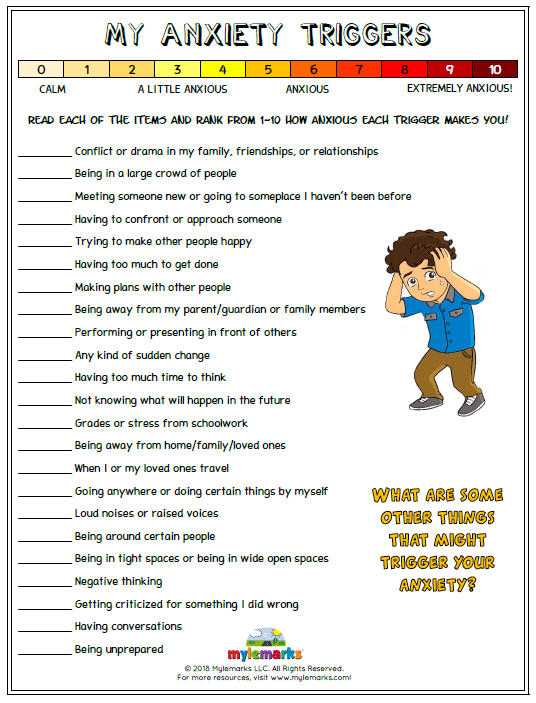
Source: mylemarks


4. You Are Here

Based on my state, as reflected in my previous post, I decided I could no longer avoid seeking help. Despite being very apprehensive and even afraid, I made an appointment with a counselling psychologist, and yesterday I had my first appointment. An hour flies by so fast when you have the chance to speak about yourself and all the things you never could before. For many reasons, a psychologist or a counsellor is easier to talk to than friends or family. Your friends and family have a pre-existing image in their minds of who you are and expect certain things from you. There are longstanding social conventions and discussing very personal thoughts can leave you feeling vulnerable, and if people do not react in positive ways, it can cause more harm. Thus, I am hopeful this psychologist can help me on my voyage. The first session consisted mostly of me speaking about my background and 'introducing' myself. Some outlines of challenging issues also started to emerge. At one point the doctor (is that the right title? I still want to ask the lady how to address her) commented that maybe there is an issue with setting boundaries (or rather not setting them). She also mentioned that bottling things up - which I very much do - is a bad thing. The time flew by, and she wanted to ask many more questions, so my next session will probably be a continuation of the 'setting of the scene' as it were. I came prepared with a printout of my Facebook post I shared in the previous post. She said she would read it before the next session. Perhaps it will give her insights that can help me. 

In parting, she gave me 'homework' for next week. She posed two questions:

  1. If I go to sleep tonight as the person I am now, and wake up tomorrow as the 'ideal happy' person I want to be, what would have had to have changed in the night?
  2. What prevents me now from being this person?

These are not easy questions, but I want to approach them from an academic standpoint. In my work, I do research, and I am also working on a PhD, so this comes naturally to me. First, I must set out the terms of the 'assignment'. What do people understand by being happy or fulfilled? What does the literature say? Something like Maslow's pyramid comes to mind already. This is also tied to my goals for therapy. What would I like to take away from the sessions? Perhaps I will ask in what ways am I happy or strong/healthy already? What are my strengths? Then perhaps what are my challenges or weaknesses, as clues to why I am not the person I would like to be. But first, I need to build a full picture for myself of what that person looks like. Unsurprisingly, a quote by Carl Sagan (Pale Blue Dot) just came to mind now:

By the time we're ready to settle even the nearest other planetary systems, we will have changed. The simple passage of so many generations will have changed us. The different circumstances we will be living under will have changed us. Prostheses and genetic engineering will have changed us. Necessity will have changed us. We're an adaptable species.
It will not be we who reach Alpha Centauri and the other nearby stars. It will be a species very like us, but with more of our strengths and fewer of our weaknesses, a species returned to circumstances more like those for which it was originally evolved, more confident, farseeing, capable, and prudent—the sorts of beings we would want to represent us in a Universe that, for all we know, is filled with species much older, much more powerful, and very different.
The vast distances that separate the stars are providential. Beings and worlds are quarantined from one another. The quarantine is lifted only for those with sufficient self knowledge and judgment to have safely traveled from star to star.
...
Our remote descendants, safely arrayed on many worlds through the Solar System and beyond, will be unified by their common heritage, by their regard for their home planet, and by the knowledge that, whatever other life may be, the only humans in all the Universe come from Earth.
They will gaze up and strain to find the blue dot in their skies. They will love it no less for its obscurity and fragility. They will marvel at how vulnerable the repository of all our potential once was, how perilous our infancy, how humble our beginnings, how many rivers we had to cross before we found our way.

Just now, I am crossing one of these great rivers, but these strengths outlined by Carl appeal to me. They are only one part of the answer, but they provide food for thought.

As I like to do and have done in research publications and in outlining most of the challenging areas I would like to work on in therapy, I will make a model of these strengths/weaknesses, hopes, and ideas found in literature, to help me answer this question. Ultimately, I do not do so for the psychologist, but for myself.  I have a long and challenging journey ahead, but I am on the road. I am here.

3. Travels in Space and Time

I should start with a recollection of my history, a recollection of past encounters that brought me to this point in my trajectory. Ons of the best ways I can do this is to copy here a post I recently placed on Facebook. This post took a very long time to be written, despite how desperately I wanted to express my feelings. Then one Saturnday night at 2am, I sat up in bed, utterly distraught and in a suicidal haze, and typed it out on my phone from start to finish. That I had the courage to post it remains astounding to me, but despite my fears that the sky would fall, I have begun - slowly - to inch towards healing. In future posts I will elaborate further on many different issues.

One of the definitions given of the word testament in the Mirriam-Webster dictionary is 'a tangible proof or tribute'. This then is my testament, a proof of my struggle and a tribute to my hope, despite all convictions to the contrary, that I can escape the dark dungeon room I currently sit in. I have always loved metaphors for some reason, so here is one. Currently I am sitting on the cold stone floor of a room. It is dark all around me. A metaphor for my depression. My room however, is invisible. I can be in the world, talking, eating, shopping, for all intents appearing normal, and at the same time I sit in this room. I have heard from the experiences of others that this room has an exit somewhere but for some reason I've convinced myself from time to time that this does not, cannot, apply to my room. My room is different. For one, it's very old. Its contruction started some time around the time I was 12, but the foundations are even older. All I know is I was 12 when I first considered the option of ending it all.

In the years since, the walls of my room were built higher - a brick was laid every time I was bullied, or felt invisible, or cried to myself in silence at night. These days my room boasts a roof, and while I'm adept at ignoring it, it has been getting rather darker in here. Perhaps this room is also a tomb, and it's almost finished.

Truth is, I have much to be grateful for, I do research work I enjoy and find endlessly fascinating. I am furthering my studies as well, and have the best PhD supervisor. I have a birdy I deeply love, and whose mischief always brings me joy. But lately something new has been happening in my dark room, invisible to the world. It has slowly been filling with water. Previously, for periods lasting even years I could forget about this room while I was - even happily - going around in the world outside. Yet, it is the curse of all mental illness (which is still stigmatised) to be invisible to the world. In this way those of us who know this path live two lives - one within and one without. At the same time these mental illnesses which are so prevalent in our world today, and perhaps always have been, but were even more invisible before, often try and tell us that something is wrong. Perhaps some aspects of them at least call our attention to all those pains we have studiously been condensing into bricks that we accumulate as we live our lives - or, in my case, that I have used to build my room.

Illnesses such as depression also turn us, or me at least, into a vampire. We fear the light and seek the dark corners and alleyways in which to feel our pain. Perhaps I have accumulated a drop of water condensing in my cold stone room every time I have done this. Now, as I sit in my room, the water has gone past my neck and I am in serious danger of drowning. I have thought many, many times of how I could express what all this is like to the world. If you see this then one of my attempts at least has worked. Yet even now I fear the shame of talking about these things. This is one of the ways in which mental ill health becomes so powerful and so dangerous. It convinces us to keep quiet, to avoid the shame, that we will be even worse off if we speak its name because others will hate us more and isolate us more. Truth is, I've done the monster's work myself out of fear of others doing it to me first. I have hated myself, shamed myself, silenced myself, isolated myself, so that I wouldn't have to feel the pain of others doing this to me once they found out how weak and deplorable I really was.

As the waters in my room rose in recent months and weeks, I've even tried something worse. Something we don't speak about or mention. Something we get shamed for and pitied for and hated for even more. Luckily I couldn't go all the way, and the scars I still carry have almost faded. Like Wolverine I heal fast and well, but this power doesn't extend to the other mind-world I live in. There, wounds never heal, and only go ignored.

Just as I like my metaphors I also love mixing them. So while on the one side this mind-world is a dark room, on the other it is also an ashland. A great enveloping wasteland where it rains ash and all things are burned and scorched. This particular metaphor is useful because in this ashland there is a particularly big mountain. I have seen others climb this mountain so I know it can be done, I just never thought I could do it myself. You see, this is a big, gay old mountain. Yes - like Pandora, I also know how to keep secrets - my mind-world and struggles, and my being gay. I know there is nothing wrong with being gay, or even with hiding it so long. This is a journey we must make in our own time and way. But the problem is when it gets bound up in the spider web of mental illness, shame, self loathing, fear, isolation, and pain, and it becomes another brick to build my dark room with, and another bucket of water to throw inside where I sit.

This is the next curse of mental illness. It becomes impossible to confront one aspect of it without confronting all of it at once. This is a daunting task for anyone, let alone someone who actually carries the weight of these burdens. This brings us to the third metaphor - that of carrying a great weight. Like Atlas I have stood guarding the heavens, carrying the world on my shoulders. But like anyone knows, you can carry a heavy weight only so long and so far before it crushes you. Thus, through decades and over quicksand have I carried my dark room, my ashland, and my bricks. And as the waters in my room rose I desired once more to lay my burdens down.

The insidiousness of depression and mental illness in general lies in its abilities to turn your faculties against you. Thus I have resisted seeking help - how pathetic must I be that I need to pay someone to listen to my problems. This was one of the things I thought as I was doing the very bad thing we don't talk about. Now, it should be noted I have managed on a lower level to speak of a sliver of my struggle. Like the last sliver of a waning moon I revealed to my doctor some of my struggle, which is how I received my anti-depressant medication. Yet like all things this does not come without its own challenges. One in particular was how tired and useless it made me. I struggled to concentrate and still do, although for this reason I stopped taking it recently. The other problem is that such support is only meant to strengthen you for a while, while you seek assistance with deeper issues - the rest of the waning moon that was still hidden in darkness. This I have not yet done.

One of the many factors that have conspired in weaving this web I am intangled in is that my personality (INTP) is such that I generally balk at seeking the help of others, prefering to try solving puzzles on my own. Being an introvert is also part of this web. None of these things is problematic or bad on their own. But like chemicals they become dangerous when combined in certain ways.

Earlier I mentioned the foundations of my room. It is indeed true that these were set a long time ago. In fact I inherited them. Here too we find another great pit, family shame and reluctance to speak out about problems. We keep our radioactive poison within our family walls until it infects and kills us. We fear shame and derision. Yet even I in my dark room know that we are all human, and the secrets we keep only retain their power to frighten us when we keep them in the dark. Depression runs in my family and through each generation it has wrought its damage and spread its radioactive poison. My grandfather, as far as I know, drank himself to death due to depression, leaving his family in disarray. Depression then passed to the next generation, and while more successful in coping with it, his son and daughter still struggle with it to this day. Then it passed to the next generation. And here I am, like reactor number 4 at Chernobyl, with my enormous steel lid bouncing up and down from the steam pressure building inside as a runaway reaction builds exponentially in the core. Even speaking of these familial struggles will likely add even more heat to the core as everyone knows we shouldn't speak of it. Nobody utters this proscription aloud. It becomes tacit knowledge, adding to the structures which bind the agents who make the structures further. Being a social scientist did lend me some understanding after all it seems.

So, at long last and after many metaphors we arrive at the final station on a long train journey (yes another metaphor). Here I am, drowning in my own dark room, lost in my ashland, crippled by the weight I bear. Yet still standing despite it all. Despite generational foundations, despite a long history of bullying, despite being my own worst enemy, despite the silence, despite the sheer overwhelming burden of it all. A lone star in a faraway corner of the universe that refuses to go out. I know I must seek the professional help I so desperately need. I know I must, like an archeologist, uncover the buried bones and ruins in my mind. I must make peace with myself. But first I had to stop here for a moment and, for the first time, let the sun shine in and publicly say the things I have had to say. Perhaps social media is not the right place to do so, perhaps there will be those who preferred that my star go out in silence in a far flung corner of the cosmos. But despite everything I think I can admit that I'm strong, even very strong, and that I will continue to stand if I only will it. Most of all however, social media allows me to share my torment with others and it lets me say - you are not alone - both to myself and to others who are trapped in invisible whirlwinds. Perhaps I never needed to say this because perhaps others are stronger than I claim to be and they already know all these things. Perhaps I am the last to get the message because light can only travel so fast and I live so far away in the cosmos.

But despite it all, here it is, the testament of [voyager]. No doubt the dark web I am still trapped in will cause me to regret writing this, and even more so regret opening my Pandora's box to the world. But I who have faced death at my own hand know it is preferable - if my star is doomed at last - to go out in a supernova, and to shine, for a moment, brighter than a galaxy.

[I don't seek pity, or attention - as my dark web convinced me people would interpret my words - but simply desired to, at least, lay some of my burden down. Also, do not fear, I am not in danger at the moment, other than that of my shame and fear at writing this. It was, in the final instance, a testament to myself - I am here, and for a moment did something I never thought I'd be brave enough to do. Perhaps this is the start of a new journey towards healing.]

2. Scaling Heaven


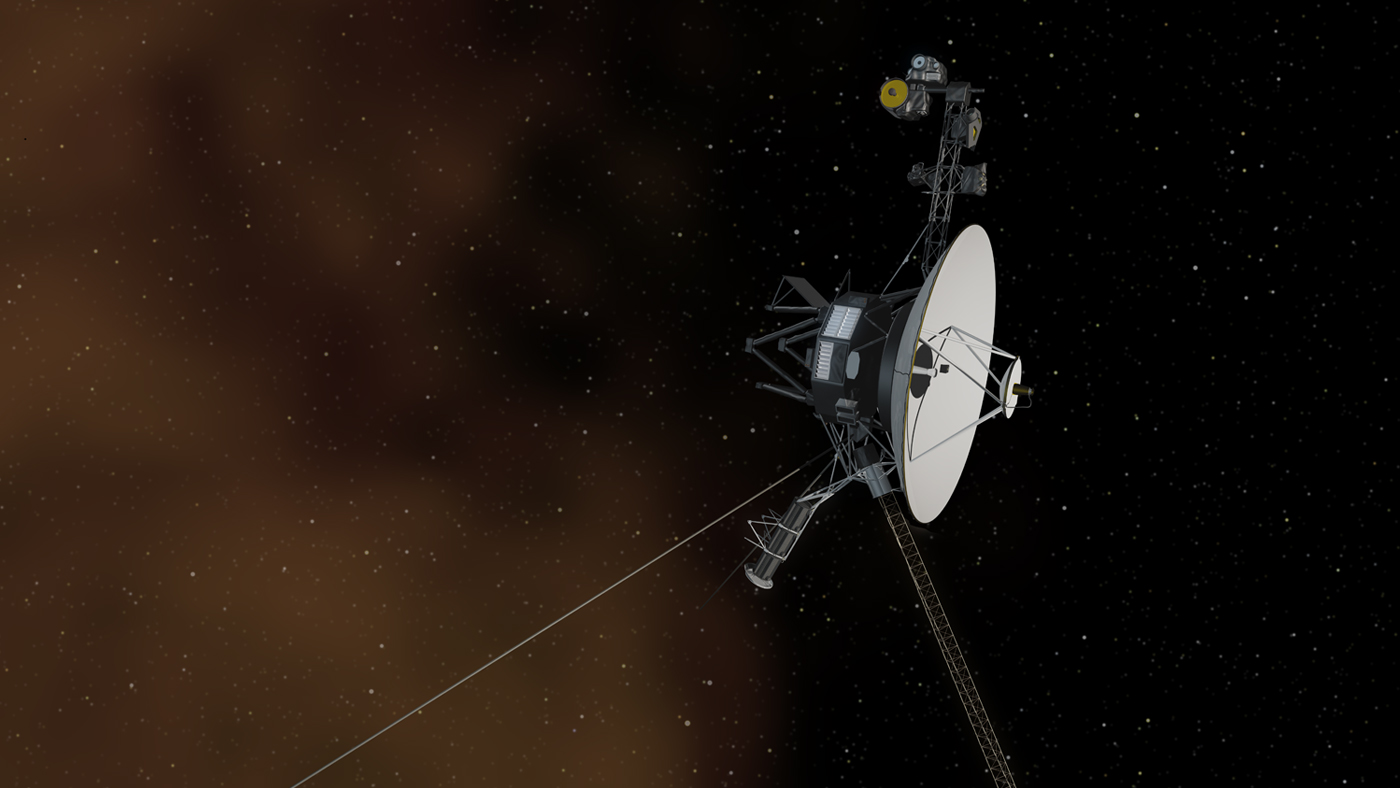
I post here a segment of Carl Sagan's Pale Blue Dot on the Voyager spacecraft. It speaks to me deeply, and on some level reflects the journey of my life, and it is a reminder to me that I too am a voyager. It is a good analogy for life. This blog is thus my mission log of past encounters and future hopes.


THE VOYAGER SPACECRAFT are bound for the stars. They are on escape trajectories from the Solar System, barreling along at almost a million miles a day. The gravitational fields of Jupiter, Saturn, Uranus, and Neptune have flung them at such high speeds that they have broken the bonds that once tied them to the Sun.
Have they left the Solar System yet? The answer depends very much on how you define the boundary of the Sun's realm. If it's the orbit of the outermost good-sized planet, then the Voyager spacecraft are already long gone; there are probably no undiscovered Neptunes. If you mean the outermost planet, it may be that there are other—perhaps Triton-like—planets far beyond Neptune and Pluto; if so, Voyager 1 and Voyager 2 are still within the Solar System. If you define the outer limits of the Solar System as the heliopause—where the interplanetary particles and magnetic fields are replaced by their interstellar counterparts—then neither Voyager has yet left the Solar System, although they may do so in the next few decades. But if your definition of the edge of the Solar System is the distance at which our star can no longer hold worlds in orbit about it, then the Voyagers will not leave the Solar System for hundreds of centuries.
Weakly grasped by the Sun's gravity, in every direction in the sky, is that immense horde of a trillion comets or more, the Oort Cloud. The two spacecraft will finish their passage through the Oort cloud in another 20,000 years or so. Then, at last, completing their long good-bye to the Solar System, broken free of the gravitational shackles that once bound them to the Sun, the Voyagers will make for the open sea of interstellar space. only then will Phase Two of their mission begin.
Their radio transmitters long dead, the spacecraft will wander for ages in the calm, cold interstellar blackness—where there is almost nothing to erode them. Once out of the Solar System, they will remain intact for a billion years or more, as they circumnavigate the center of the Milky Way galaxy.
We do not know whether there are other space-faring civilizations in the Milky Way. If theydo exist, we do not know how abundant they are, much less where they are. But there is at least a chance that sometime in the remote future one of the Voyagers will be intercepted and examined by an alien craft.
Accordingly, as each Voyager left Earth for the planets and the stars, it carried with it a golden phonograph record encased in a golden, mirrored jacket containing, among other things; greetings in 59 human languages and one whale language; a 12-minute sound essay including a kiss, a baby's cry, and an EEG record of the meditations of a young woman in love; 116 encoded pictures, on our science, our civilization, and ourselves; and 90 minutes of the Earth's greatest hits—Eastern and Western, classical and folk, including a Navajo night chant, a Japanese shakuhachi piece, a Pygmy girl's initiation song, a Peruvian wedding song, a 3,000-year-old composition for the ch'in called "Flowing Streams," Bach, Beethoven, Mozart, Stravinsky, Louis Armstrong, Blind Willie Johnson, and Chuck Berry's "Johnny B. Goode."
Space is nearly empty. There is virtually no chance that one of the Voyagers will ever enter another solar system—and this is true even if every star in the sky is accompanied by planets. The instructions on the record jackets, written in what we believe to be readily comprehensible scientific hieroglyphics, can be read, and the contents of the records understood, only if alien beings, somewhere in the remote future, find Voyager in the depths of interstellar space. Since both Voyagers will circle the center of the Milky Way Galaxy essentially forever, there is plenty of time for the records to be found—if there's anyone out there to do the finding.
We cannot know how much of the records they would understand. Surely the greetings will be incomprehensible, but their intent may not be. (We thought it would be impolite not to say hello.) The hypothetical aliens are bound to be very different from us—independently evolved on another world. Are we really sure they could understand anything at all of our message? Every time I feel these concerns stirring, though, I reassure myself. Whatever the incomprehensibilities of the Voyager record, any alien ship that finds it will have another standard by which to judge us. Each Voyager is itself a message. In their exploratory intent, in the lofty ambition of their objectives, in their utter lack of intent to do harm, and in the brilliance of their design and performance, these robots speak eloquently for us.
But being much more advanced scientists and engineers than we—otherwise they would never be able to find and retrieve the small, silent spacecraft in interstellar space—perhaps the aliens would have no difficulty understanding what is encoded on these golden records. Perhaps they would recognize the tentativeness of our society, the mismatch between our technology and our wisdom. Have we destroyed ourselves since launching Voyager, they might wonder, or have we gone on to greater things?
Or perhaps the records will never be intercepted. Perhaps no one in five billion years will
ever come upon them. Five billion years is a long time. In five billion years, all humans will have become extinct or evolved into other beings, none of our artifacts will have survived on Earth, the continents will have become unrecognizably altered or destroyed, and the evolution of the Sun will have burned the Earth to a crisp or reduced it to a whirl of atoms. Far from home, untouched by these remote events, the Voyagers, bearing the memories of a world that is no more, will fly on.